Big Numbers, Big Feelings: The Ad Formula That Sells the Result Twice


Founder and Head of Growth, White Label Comedy
Your results are a number. The reason anyone buys them is a feeling. This ad format puts both on the same image.
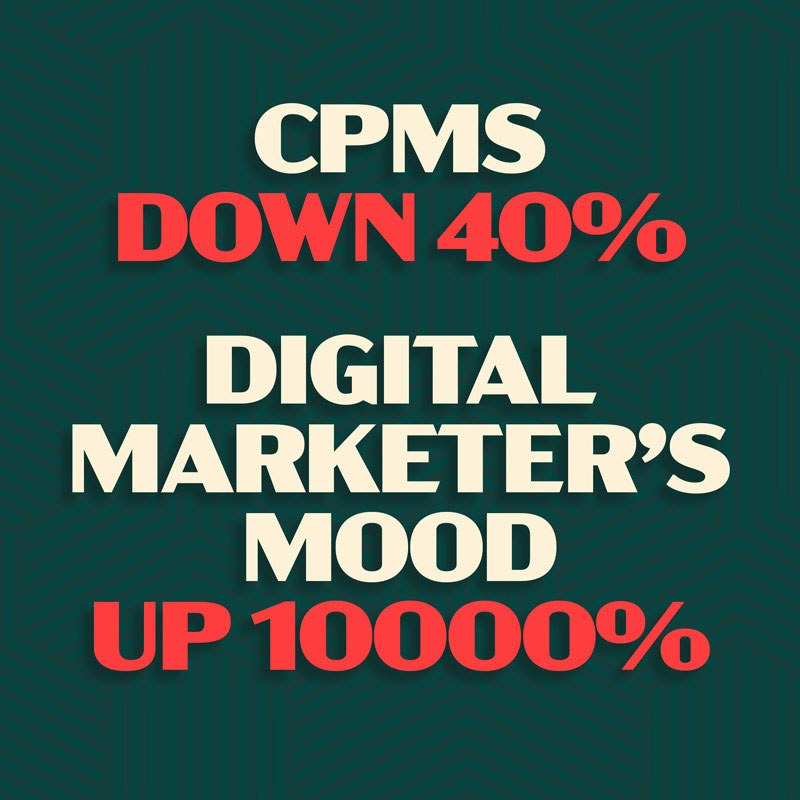
Take the real result you deliver, "CPMs down 40%", and stack a second, ridiculously inflated number underneath it that measures how the buyer will feel when it happens: "mood up 10,000%". The first number earns belief. The second number earns the laugh and makes the benefit personal. Same result, sold twice in about four seconds.
Why aren't my results stats enough on their own?
Because a number tells people what happens, not why they should care.
"40% lower CPMs" is a strong claim, and it belongs in your ad. But the reader has to do the translation themselves: lower CPMs means more budget left, which means fewer awkward meetings, which means sleeping on Sunday night. Most people scrolling a feed will not do that maths for you. They see a percentage, file it under "sounds like every other ad" and keep going.
The emotional payoff is what they are actually buying. Nobody wakes up wanting a better ROAS. They want to stop dreading the dashboard. This format does the translation for them, and it does it with a joke, which is the bit that stops the thumb.
How does the two number formula work?
Line one is the honest result. Line two is the feeling, measured with a number so big it is obviously a joke.
The structure borrows the costume of a results claim, bold figure, short label, and then breaks it on the second line. The reader's brain clocks "statistic" and leans in, then finds the second statistic is about not quitting their job to spin a sign at the traffic lights. That flip from serious to silly is the laugh.
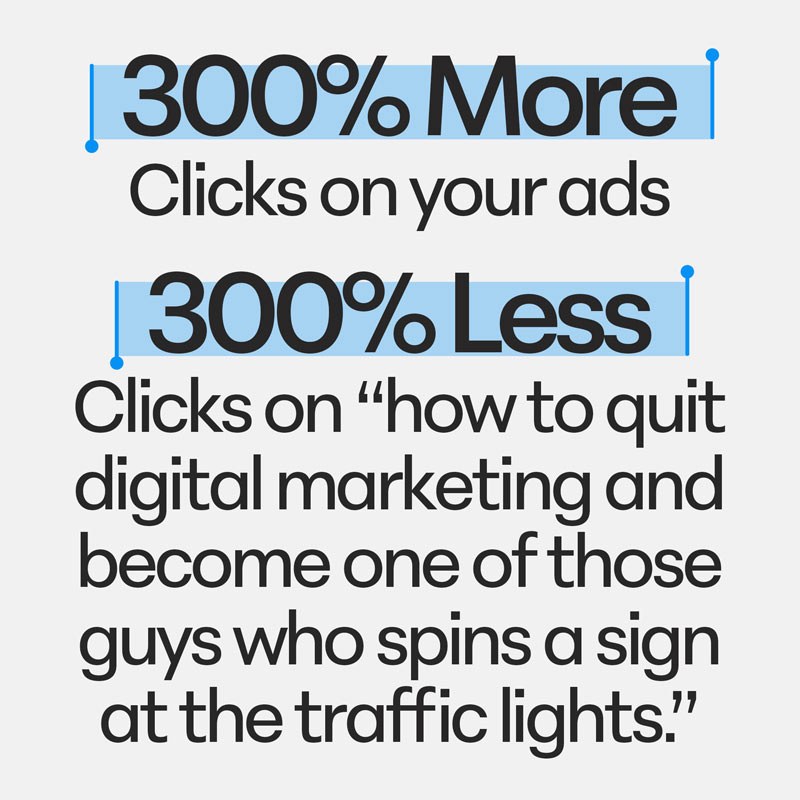
Notice the pairing in that one. "300% more" and "300% less" mirror each other, so the eye reads them as a matched set. The more the second line copies the shape of the first, the harder the twist lands.
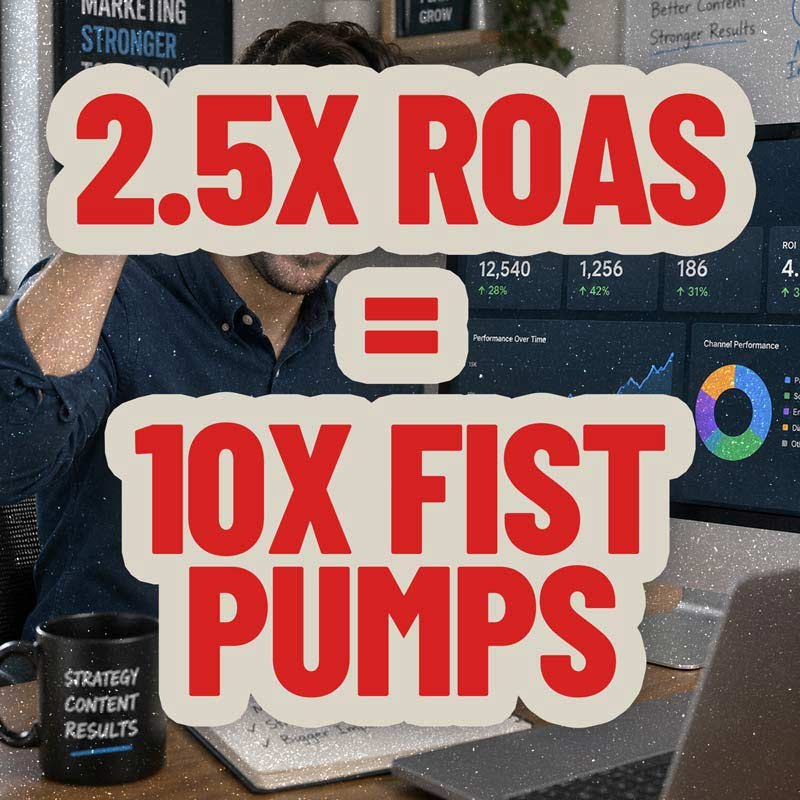
You can also drop the second line entirely and use an equals sign. It is the same idea compressed into one punch:
How do I build one for my business?
Start with your most believable result, then ask what your buyer will do, say or stop feeling the day they get it.
- Pick the real number. Your strongest, most defensible result: hours saved, pounds back, leads per week, a cost that dropped. Keep it accurate. This is the line doing the selling.
- Find the feeling, specifically. Not "happier". What exactly changes? They stop checking the account at 2am. They stop arguing with the co-founder. They finally have an answer when a relative asks how the business is going.
- Measure the feeling with an absurd number. 2,000%, 10x, 10,000%. The bigger and more precise the figure, the clearer it is that this line is a joke, which is what keeps the first line credible.
- Make the feeling oddly specific. "More confidence" is flat. "More bragging power the next time your weasel of a brother-in-law asks how the business is going" is a scene the reader has lived through.
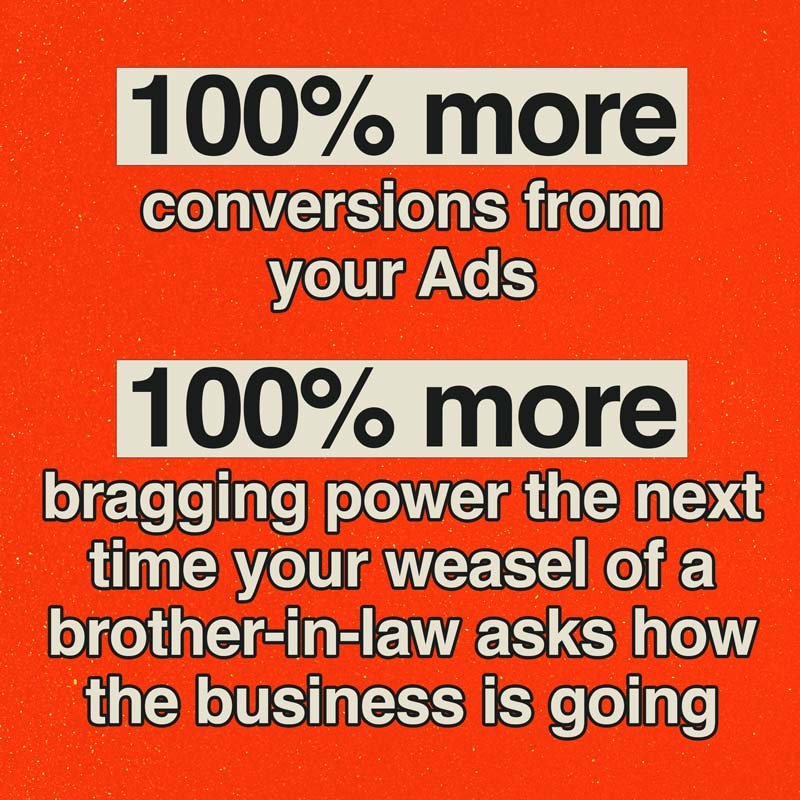
That last one shows step four at full volume. The brother-in-law is the whole ad. Every small business owner has a version of that person, and the moment they recognise them, the ad stops being about conversions and starts being about them.
Will a joke statistic get my ad in trouble?
Not if the joke number is impossible to mistake for a claim, and the real number is true.
Meta and your audience both care about misleading results claims, so keep the two lines doing separate jobs. The first line is a genuine, supportable result. The second line is so plainly absurd (nobody measures mood in percentages) that no reasonable reader would take it literally. Where this goes wrong is a joke number that is merely optimistic, like "conversions up 900%", sitting in the result slot. That reads as a dodgy promise, not a gag. Exaggerate the feeling, never the outcome.
Meet Brian
Turning a dry results stat into the feeling your buyer is secretly paying for is exactly the kind of angle Brian is built to find.
Brian is the world's only genuinely funny AI Marketer. He researches your ideal customer, maps out the angles that will resonate, writes your ad copy, punches it up with jokes and builds the creatives too. Every week he gets five brand new Comedy Creative frameworks, including this one, so the formats keep coming long after you have used the obvious ones.
Try Brian on your next campaign and put both your numbers to work.
Adam Hunt
Founder and Head of Growth at White Label Comedy. He spends his days convincing serious brands that funny is the most profitable thing they're not doing.
Your marketing isn’t broken. It’s just boring.
It’s time you met the agency behind the internet’s most profitable funny brands.
Work with us